Losing Weight on a GLP-1? Why Protecting Your Muscle Matters
If you are taking a GLP-1 medication such as semaglutide (Wegovy, Ozempic) or tirzepatide (Zepbound, Mounjaro), you may be seeing the scale move faster than it has in years. That can feel like a huge relief, and it should. These medications have changed what weight loss looks like for a lot of people.
There is one question that does not get asked often enough, though: what exactly is the weight you are losing?
The scale can't tell the difference between fat, muscle, water and bone. For adults in their 40s, 50s and beyond, that difference matters a lot. Here is what the research actually shows, and what you can do about it.
How much of the weight lost is lean mass?
Several of the large GLP-1 trials measured body composition with DXA scans, which separate fat from lean tissue.
- Semaglutide (STEP 1 trial). In the group that had DXA scans, people lost an average of 13.6 kg (about 30 lb). Of that, 8.3 kg (62%) was fat and 5.3 kg (38%) was lean body mass. That figure comes from a 2025 joint advisory by four nutrition and obesity medicine organizations. Lean mass includes muscle plus other non-fat tissue. Since muscle is roughly half of lean mass, the advisory estimates that about 20% of the total weight lost was muscle.
- Tirzepatide (SURMOUNT-1 trial). In a DXA substudy of 160 participants, people taking tirzepatide lost 21.3% of their body weight over 72 weeks. Their fat mass fell 33.9% and their lean mass fell 10.9%. About 75% of the weight lost was fat and about 25% was lean mass. That split was similar in the placebo group and held across most age and sex subgroups.
A 2024 review in Diabetes, Obesity and Metabolism found a wide range across studies. In some, lean mass made up 40% to 60% of the weight lost. In others it was about 15% or less. The authors list several reasons for the spread, including who was studied, which drug was used, and the fact that "lean mass" is not the same as muscle. It also counts organs, bone and water.
Is this cause for alarm?
Not alarm, but attention. The same 2024 review describes MRI studies suggesting that muscle changes on these medications may be partly adaptive. In other words, the muscle lost may be in line with the weight lost, and muscle quality (less fat inside the muscle) may even improve. The authors also point out that older age and certain health conditions can raise the risk of sarcopenia, the age-related loss of muscle and strength, during weight loss.
The 2025 joint advisory came from the American College of Lifestyle Medicine, the American Society for Nutrition, the Obesity Medicine Association and The Obesity Society. It lists "muscle and bone loss" among the main challenges of GLP-1 treatment. It notes that how much lean mass people lose depends on how hard they cut calories, how fast they lose weight, and whether they do strength training.
Put simply, losing some lean tissue during big weight loss is expected. How much you lose is partly up to you.
Why muscle matters so much after 40
Muscle does far more than help you look toned. It is what gets you up off the floor, carries the groceries, keeps you steady on the stairs and helps your body handle blood sugar. The joint advisory notes that low muscle and bone mass are linked to physical disability, falls and fractures, surgical complications, lower quality of life and shorter survival.
We also naturally lose muscle and strength as we age, a topic we'll cover in a separate post. Combine normal aging with rapid weight loss and no plan to protect your muscle, and you can end up lighter but weaker. That is not the goal.
What the research says helps: strength training first
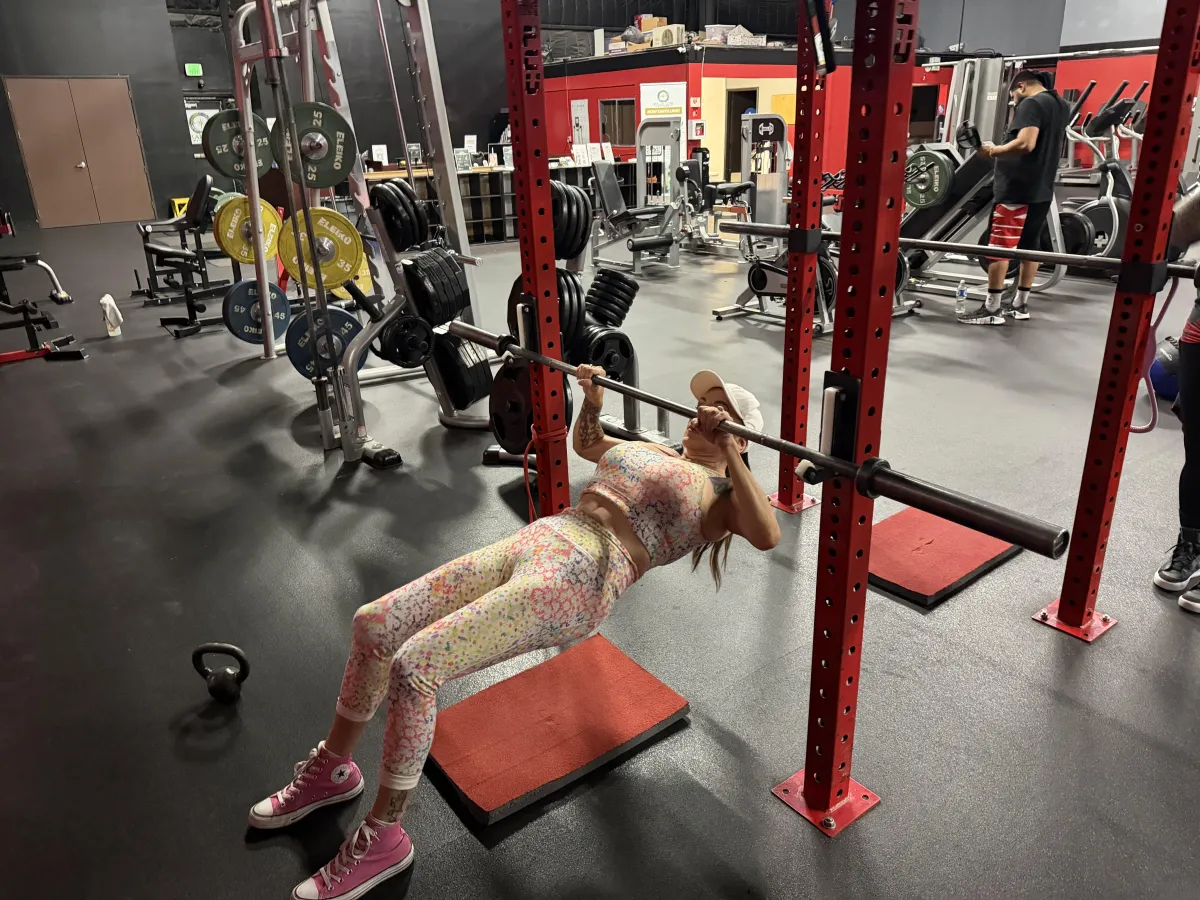
The clearest message in the research is that strength (resistance) training is the main tool for protecting muscle during weight loss.
- The joint advisory states that structured strength training, or a mix of strength and aerobic training, is "well established" to help preserve lean mass during weight reduction. It notes that aerobic exercise alone has a smaller effect.
- It recommends pairing GLP-1 medications with a structured exercise program that includes strength training at least three times a week and at least 150 minutes of moderate aerobic activity weekly.
- A randomized trial in the New England Journal of Medicine (2017) followed 160 older adults with obesity on a weight-loss program. Everyone in the exercise groups lost about 9% of their body weight. Those who did resistance training, or resistance plus aerobic training, lost only 2% to 3% of their lean mass. The aerobic-only group lost 5%. Strength rose about 18% to 19% in the resistance and combined groups, compared with 4% in the aerobic-only group.
You do not need to train like an athlete. You need a program that progressively challenges your major muscle groups and is built around how your body moves today.
Protein: the partner to strength training
When appetite drops on a GLP-1, protein is often the first thing to slide. The joint advisory says that low protein intake caused by reduced appetite may add to muscle loss. The risk is higher with older age, around menopause, with lower testosterone, and with little activity or strength training.
The advisory mentions higher targets of about 1.2 to 1.6 grams of protein per kilogram of body weight per day during active weight loss. It also offers a simpler absolute target of 80 to 120 grams per day as an option. One practical tip: eat the protein on your plate first, so you get it in before you feel full.
The advisory also makes an important point: more protein alone is likely not enough to protect muscle without structured strength training. The two work together.
We cover protein targets and real-food examples in detail in our protein post.
What you can control starting this week
- Strength train on a schedule. Aim for regular sessions that work your legs, hips, back, chest and arms, and that get gradually harder over time.
- Put protein first. Build each meal around a protein you actually enjoy.
- Track body composition, not just weight. A body composition scan shows whether you are losing mostly fat or also losing muscle, so you can adjust before it becomes a problem.
- Keep moving between sessions. Walking and other aerobic activity support heart health and add to the strength work.
- Stay in touch with your healthcare provider about your medication, side effects and lab work.
How we help at Peak Life Fitness
Our GLP Education & Coaching program is built for people using GLP-1 medications who want to keep their strength while they lose weight. It includes personalized nutrition built around foods you enjoy, InBody body-composition tracking, strength-training support, and coaching and accountability. Every PLF program also includes unlimited Large Group Training and unlimited Semi-Private Strength Training.
Ready to protect what matters?
If you're losing weight on a GLP-1 and want a plan that protects your muscle, we'd love to talk. Schedule a wellness consultation with Jeff and Michelle. There's no pressure; it's a conversation about where you are and where you want to go. You can also learn more about our GLP Education & Coaching program.
Frequently Asked Questions
Do GLP-1 medications cause muscle loss? Weight loss from any cause, including GLP-1 medications, usually includes some lean mass. In the semaglutide STEP 1 trial, about 38% of the weight lost was lean mass. In the tirzepatide SURMOUNT-1 substudy it was about 25%. Lean mass includes muscle plus organs, bone and water.
How can I keep muscle while taking a GLP-1? The strongest evidence supports regular strength training plus enough protein. A 2025 joint advisory recommends strength training at least three times a week along with aerobic activity.
How much protein should I eat on a GLP-1? The 2025 joint advisory mentions targets of about 1.2 to 1.6 g per kg of body weight per day during active weight loss, or a simpler range of 80 to 120 g per day. Your needs depend on your size, activity and health, so ask your healthcare provider what fits you.
Is walking enough to protect muscle? Walking is great for overall health, but research shows aerobic exercise alone protects lean mass less well than strength training or strength plus aerobic training.
How do I know if I'm losing fat or muscle? A body composition test, such as a DXA or InBody scan, estimates fat and lean mass separately. Tracking it over time shows what kind of weight you are losing.
Sources
- Mozaffarian D, et al. Nutritional priorities to support GLP-1 therapy for obesity: a joint Advisory from the American College of Lifestyle Medicine, the American Society for Nutrition, the Obesity Medicine Association, and The Obesity Society. Am J Clin Nutr. 2025;122(1):344-367. https://doi.org/10.1016/j.ajcnut.2025.04.023 (PubMed: https://pubmed.ncbi.nlm.nih.gov/40450457/)
- Look M, et al. Body composition changes during weight reduction with tirzepatide in the SURMOUNT-1 study of adults with obesity or overweight. Diabetes Obes Metab. 2025;27(5):2720-2729. https://doi.org/10.1111/dom.16275 (PubMed: https://pubmed.ncbi.nlm.nih.gov/39996356/)
- Neeland IJ, Linge J, Birkenfeld AL. Changes in lean body mass with glucagon-like peptide-1-based therapies and mitigation strategies. Diabetes Obes Metab. 2024;26 Suppl 4:16-27. https://doi.org/10.1111/dom.15728 (PubMed: https://pubmed.ncbi.nlm.nih.gov/38937282/)
- Wilding JPH, et al. Once-weekly semaglutide in adults with overweight or obesity (STEP 1). N Engl J Med. 2021;384(11):989-1002. https://doi.org/10.1056/NEJMoa2032183 (PubMed: https://pubmed.ncbi.nlm.nih.gov/33567185/)
- Villareal DT, et al. Aerobic or resistance exercise, or both, in dieting obese older adults. N Engl J Med. 2017;376(20):1943-1955. https://doi.org/10.1056/NEJMoa1616338 (PubMed: https://pubmed.ncbi.nlm.nih.gov/28514618/)
