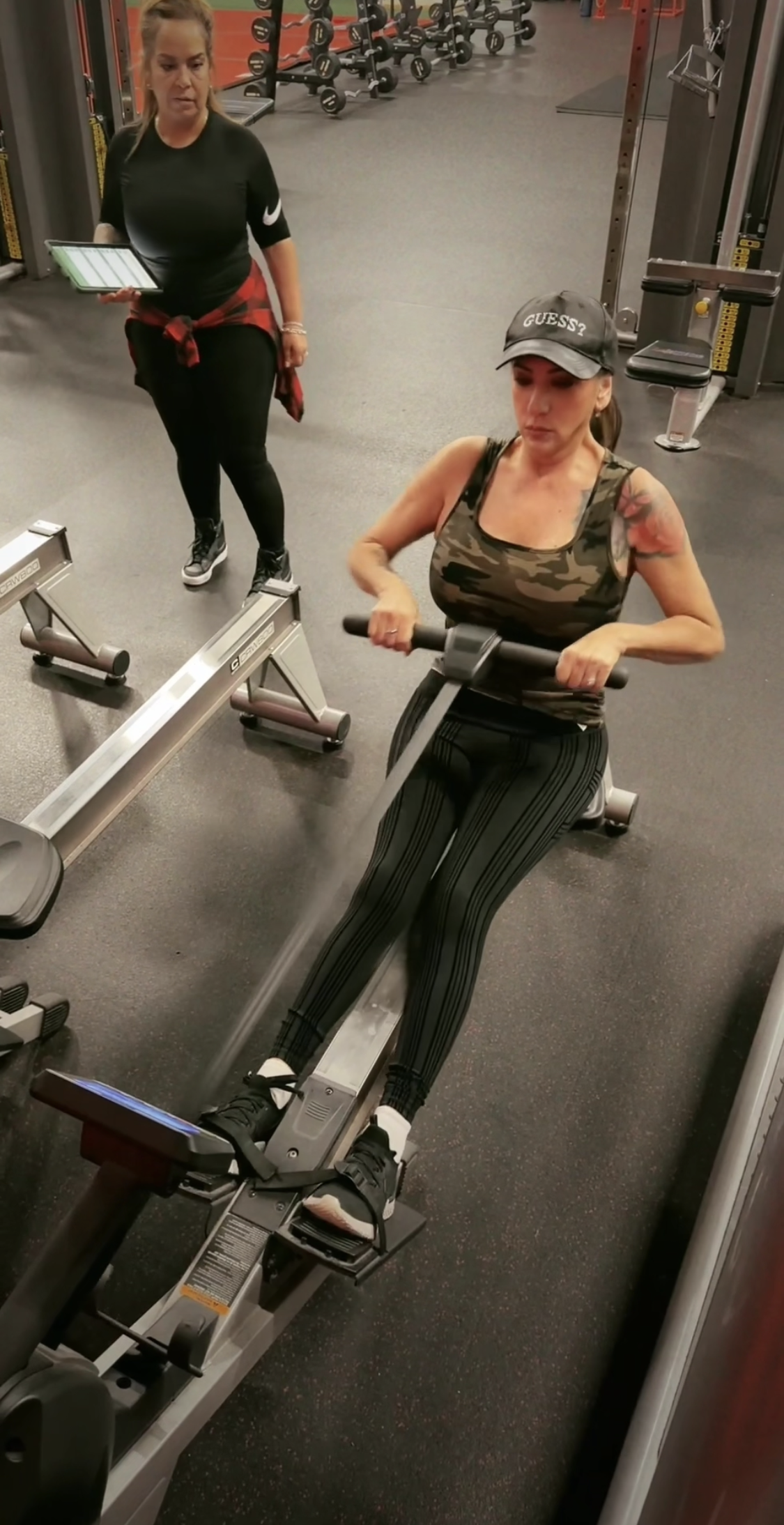
Cardio After 40: How Much You Need, Zone 2 vs. Intervals, and How It Fits With Strength Training
If you follow fitness on social media, you've probably heard that "zone 2" cardio is the secret to longevity, that intervals are the only cardio worth doing, or that cardio "kills your gains." It's confusing, and most of it is louder than the research behind it.
Here's what the guidelines and the research actually say about cardio for adults in their 40s and 50s, and how it fits with strength training.
Why cardio still matters
Strength training gets a lot of attention on this blog, for good reason. But your heart and lungs need training too.
Cardiorespiratory fitness, your body's ability to take in and use oxygen during exercise, is one of the strongest health markers we have. A 2009 meta-analysis in JAMA pooled 33 studies with more than 100,000 healthy men and women. Each 1-MET higher level of fitness (roughly the difference of 1 km/h faster running or jogging speed) was associated with:
13% lower risk of death from any cause
15% lower risk of heart disease and cardiovascular events
People in the low-fitness group had about a 70% higher risk of death than those in the high-fitness group. These are observational findings, but they're consistent, and fitness is something you can improve with training.
How much cardio do you need?
The US Physical Activity Guidelines for Americans recommend that adults get:
150 to 300 minutes a week of moderate-intensity aerobic activity, or
75 to 150 minutes a week of vigorous-intensity aerobic activity, or
An equivalent combination of both
The guidelines add that going beyond 300 minutes a week of moderate activity brings additional health benefits, and that adults should also do muscle-strengthening activities for all major muscle groups on 2 or more days a week.
How to tell moderate from vigorous
The CDC's "talk test" is the simplest way:
Moderate intensity: You can talk, but not sing.
Vigorous intensity: You can't say more than a few words without pausing for a breath.
Brisk walking is a classic moderate activity for most people. Hill walking, cycling hard, rowing or a fast-paced class may move you into vigorous territory.
What about zone 2?
"Zone 2" is usually defined as steady, low-intensity exercise below your lactate threshold. For most people it feels comfortable: you can hold a conversation and keep going for a long time.
Zone 2 became popular because elite endurance athletes do a lot of it and have excellent metabolic health. But a 2025 review in Sports Medicine, titled "Much Ado About Zone 2," looked closely at the research for the general public. The authors concluded that:
Current evidence does not support zone 2 as the optimal intensity for improving mitochondrial or fat-burning capacity.
Higher intensities appear important for maximizing cardiometabolic benefits, especially when total training time is limited.
That doesn't mean easy cardio is useless. Easy cardio is a great way to build a base, recover between harder days, and accumulate the weekly minutes the guidelines recommend, especially if you're just getting started. It's just not magic, and it's not the only option.
What about interval training?
High-intensity interval training (HIIT) alternates short bursts of hard effort with periods of easier recovery.
A 2014 meta-analysis in the British Journal of Sports Medicine looked at 10 studies of people with lifestyle-related cardiometabolic conditions, including coronary artery disease, heart failure, high blood pressure, metabolic syndrome and obesity. HIIT increased peak aerobic fitness (VO2peak) by almost double the amount seen with moderate-intensity continuous training.
That's a strong result for a time-efficient form of training. Still, intervals are hard work. Most people do best with a small number of interval sessions mixed with easier cardio, built up gradually. If you have a heart condition or other medical condition, talk with your healthcare provider before starting high-intensity exercise.
Does cardio hurt your strength gains?
This is a common fear, especially for people trying to protect muscle. The research is reassuring.
A 2022 meta-analysis in Sports Medicine (43 studies) compared people doing strength training alone with people doing the same strength training plus aerobic training. Adding cardio:
Did not reduce gains in muscle size
Did not reduce gains in maximal strength
Did slightly reduce gains in explosive strength (like jumping and sprinting power), especially when cardio and strength were done in the same session
These results held regardless of age (under or over 40), training status, or whether the cardio was running or cycling. For most adults over 40, whose goals are muscle, strength, health and function, cardio and strength training work well together.
There's even more good news from a 2017 trial in older adults with obesity: the group that did both aerobic and resistance training while losing weight improved physical function the most, and kept more muscle than the group that only did aerobic exercise.
Putting it together: a sample week
Here's one way a balanced week could look for many adults over 40. Adjust for your schedule, experience and any medical guidance you've received.
2 to 3 strength training sessions covering all major muscle groups
2 to 3 easier cardio sessions (brisk walking, cycling, rowing) of 20 to 45 minutes, at a "can talk, can't sing" effort
Optional: 1 interval session once you have a base, for example short harder efforts with easy recovery between them
Daily movement, like walks after meals
If you're short on time, combining a strength session with a short cardio finisher is a practical option. If explosive power is a priority for you, consider separating cardio and strength by a few hours when you can.
How cardio fits at Peak Life Fitness
Our Large Group Training offers coach-led group workouts with a strong community feel, at times that fit early risers and after-work schedules: Monday through Thursday at 4, 5, 8 and 9 AM and 5 and 6 PM; Friday at 4, 5, 8 and 9 AM and 5:30 PM; and Saturday at 8 and 9 AM. Every PLF program includes unlimited Large Group and unlimited Semi-Private Strength Training, so you can build both your strength and your conditioning.
Train your heart and your muscles
Want a plan that balances cardio and strength for your goals and schedule? Schedule a free phone consultation with Jeff or Michelle, or check out our Large Group Training schedule.
Frequently Asked Questions
How much cardio should I do after 40? The US guidelines recommend 150 to 300 minutes a week of moderate-intensity activity, or 75 to 150 minutes of vigorous activity, or a combination, plus muscle-strengthening activities on 2 or more days a week.
Is zone 2 training the best type of cardio? A 2025 review in Sports Medicine concluded that current evidence does not support zone 2 as the optimal intensity for improving mitochondrial capacity, and that higher intensities matter more when training time is limited. Easy cardio still has value as part of a balanced plan.
Is HIIT better than steady cardio? In a 2014 meta-analysis of people with cardiometabolic conditions, HIIT improved aerobic fitness almost twice as much as moderate continuous training. Most people benefit from a mix of both.
Will cardio make me lose muscle? A 2022 meta-analysis found adding cardio to strength training did not reduce gains in muscle size or maximal strength. It slightly reduced explosive strength gains, mostly when both were done in the same session.
How do I know if I'm working at moderate or vigorous intensity? Use the CDC talk test: at moderate intensity you can talk but not sing; at vigorous intensity you can't say more than a few words without pausing for breath.
Sources
Kodama S, et al. Cardiorespiratory fitness as a quantitative predictor of all-cause mortality and cardiovascular events in healthy men and women: a meta-analysis. JAMA. 2009;301(19):2024-35. https://doi.org/10.1001/jama.2009.681 (PubMed: https://pubmed.ncbi.nlm.nih.gov/19454641/)
US Department of Health and Human Services. Physical Activity Guidelines for Americans, 2nd edition. 2018. https://odphp.health.gov/sites/default/files/2019-09/Physical_Activity_Guidelines_2nd_edition.pdf
CDC. Measuring Physical Activity Intensity. https://www.cdc.gov/physical-activity-basics/measuring/index.html
Storoschuk KL, et al. Much Ado About Zone 2: A Narrative Review Assessing the Efficacy of Zone 2 Training for Improving Mitochondrial Capacity and Cardiorespiratory Fitness in the General Population. Sports Med. 2025;55(7):1611-1624. https://doi.org/10.1007/s40279-025-02261-y (PubMed: https://pubmed.ncbi.nlm.nih.gov/40560504/)
Weston KS, et al. High-intensity interval training in patients with lifestyle-induced cardiometabolic disease: a systematic review and meta-analysis. Br J Sports Med. 2014;48(16):1227-34. https://doi.org/10.1136/bjsports-2013-092576 (PubMed: https://pubmed.ncbi.nlm.nih.gov/24144531/)
Schumann M, et al. Compatibility of Concurrent Aerobic and Strength Training for Skeletal Muscle Size and Function: An Updated Systematic Review and Meta-Analysis. Sports Med. 2022;52(3):601-612. https://doi.org/10.1007/s40279-021-01587-7 (PubMed: https://pubmed.ncbi.nlm.nih.gov/34757594/)
Villareal DT, et al. Aerobic or Resistance Exercise, or Both, in Dieting Obese Older Adults. N Engl J Med. 2017;376(20):1943-1955. https://doi.org/10.1056/NEJMoa1616338 (PubMed: https://pubmed.ncbi.nlm.nih.gov/28514618/)
