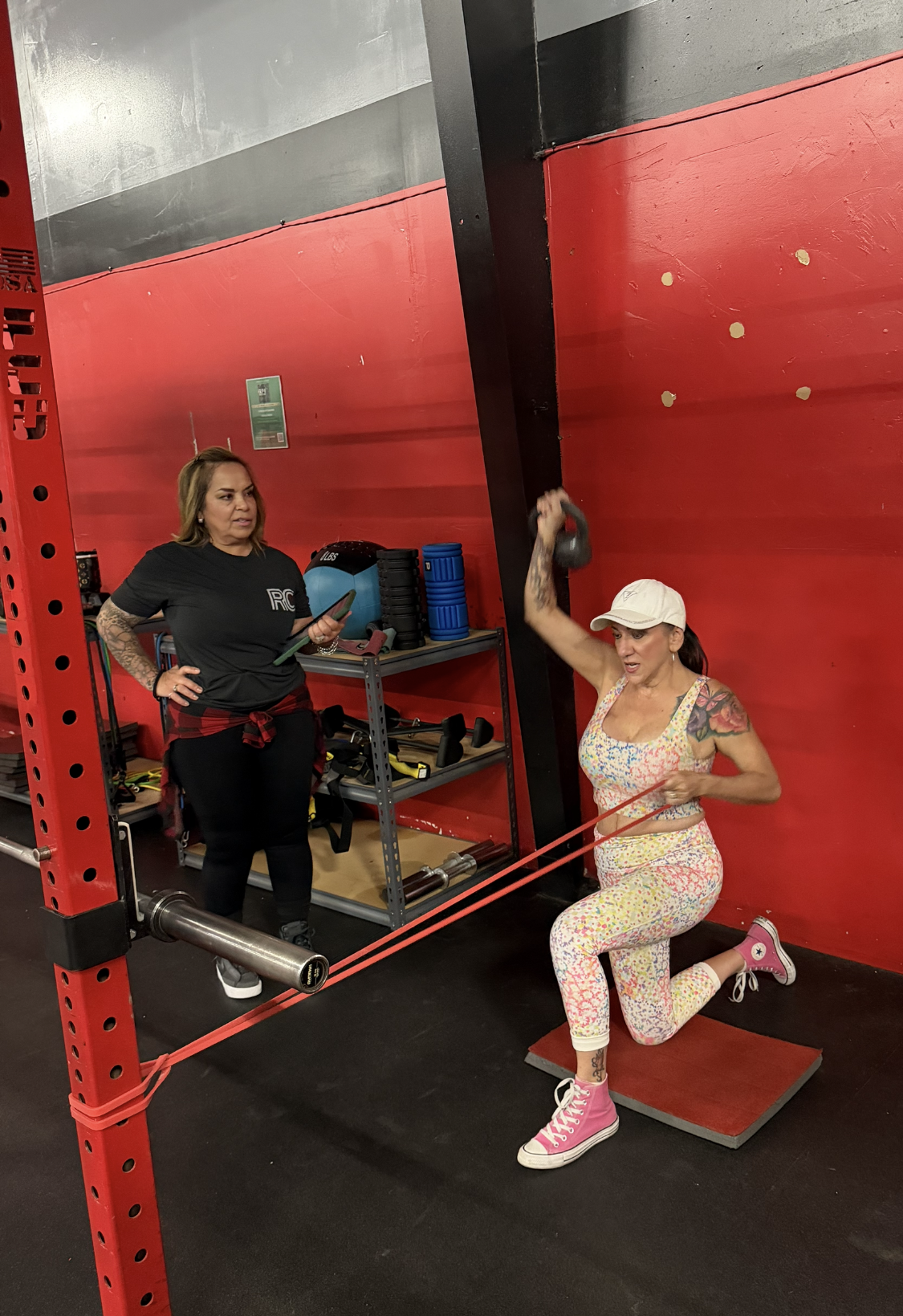
Balance, Falls and Staying Independent: How Strength and Balance Training Help After 40
Most people in their 40s and 50s don't think much about falling. It feels like something to worry about decades from now.
But the strength and balance you build now are what you'll be living on later. And the research on falls is clear: they are common, they are serious, and the right kind of training reduces them.
How common are falls?
According to the CDC:
About 1 in 4 adults age 65 and older, more than 14 million people, report falling each year. Less than half tell their doctor.
Falls are the leading cause of fatal and nonfatal injuries among adults 65 and older.
Falls lead to about 4.5 million emergency department visits a year among older adults.
Falling once doubles your chances of falling again.
Falls cause 88% of emergency visits and hospitalizations for hip fractures, and they are the leading cause of traumatic brain injuries in older adults.
The age-adjusted fall death rate among older adults rose from 64.7 per 100,000 in 2018 to 78.4 per 100,000 in 2024, a 21% increase.
Globally, the World Health Organization estimates that 684,000 people die from falls each year, making falls the second leading cause of unintentional injury deaths worldwide. Adults over 60 suffer the greatest number of fatal falls.
Why this matters in your 40s and 50s
Balance doesn't disappear overnight at 65. Research suggests it starts slipping well before then.
A 2022 study in the British Journal of Sports Medicine followed 1,702 adults ages 51 to 75. At the start, each person tried to stand on one leg for 10 seconds without support. About 1 in 5 could not do it. Over a median of 7 years, those who couldn't complete the test had an 84% higher risk of death from any cause, even after accounting for age, sex, BMI and other health conditions. The authors noted that balance "quickly diminishes after the mid-50s."
This is an association, not proof that poor balance itself causes death. Balance is likely a marker of overall fitness and health. But it shows how much a simple ability like standing on one leg can tell us, and it's an ability you can train.
What the research says about exercise and falls
The strongest evidence comes from a 2019 Cochrane review of 108 randomized trials with more than 23,000 people age 60 and older living in the community.
Compared with control groups, exercise:
Reduced the rate of falls by 23% (high-certainty evidence)
Reduced the number of people who fell by 15% (high-certainty evidence)
The type of exercise mattered:
Balance and functional exercises reduced the rate of falls by 24% (high-certainty evidence). These include things like standing on one leg, stepping practice, getting up from a chair and moving in different directions.
Multiple types of exercise, most often balance and functional training plus resistance training, probably reduced the rate of falls by 34% (moderate-certainty evidence).
Tai Chi may reduce the rate of falls by 19%.
The review was uncertain about the effect of programs that were mostly resistance training alone, or walking or dance alone, on falls.
That last point is important. Strength training is essential for muscle, bone and function, but the fall-prevention evidence is strongest when strength is combined with dedicated balance and functional work.
What the guidelines recommend
The US Physical Activity Guidelines say older adults should do "multicomponent physical activity that includes balance training as well as aerobic and muscle-strengthening activities."
The CDC recommends older adults get at least 150 minutes of moderate activity a week, at least 2 days of muscle-strengthening activities, and activities to improve balance, such as walking heel-to-toe or standing up from a seated position.
WHO lists gait, balance and functional training among the interventions for reducing falls in older people.
The 2022 World Guidelines for Falls Prevention, developed by an international expert group, recommend that all older adults be advised on falls prevention and physical activity, and that people at high risk get a full falls-risk assessment and a personalized plan.
What balance and strength training can look like
You don't need special equipment. Examples of the kinds of movements used in research and coaching include:
Sit-to-stand from a chair, without using your hands if you can
Single-leg stands, holding a counter or rail at first
Heel-to-toe walking along a line
Step-ups onto a low step
Lunges and split squats, supported if needed
Carries, like walking while holding weights at your sides
Hip and leg strength work, such as squats, hip hinges and glute bridges
Progress gradually. Start with support nearby, then reduce it as you get steadier. A coach can help you find the right starting point so the work is challenging without being risky.
Other things that help
Exercise is one piece. The CDC also notes the value of fall-risk screening and addressing other risk factors such as medications. If you've fallen, feel unsteady, get dizzy, or have changes in vision, talk with your healthcare provider. Those are worth checking out, and a provider can review medications and other factors that may affect balance.
How we approach balance at Peak Life Fitness
In our Semi-Private Strength Training program, every member starts with a two-week Body Mapping of about 90 movements. That gives us a clear picture of how you move, so your hyper-personalized program can build strength and balance from where you actually are. Groups are capped at 6 members per coach, and members get a monthly InBody scan and hyper-personalized nutrition. Every PLF program also includes unlimited Large Group and unlimited Semi-Private Strength Training.
Build the strength to stay independent
The best time to build balance is before you need it. Schedule a free phone consultation with Jeff or Michelle, or learn more about Semi-Private Strength Training.
Frequently Asked Questions
How common are falls in older adults? According to the CDC, about 1 in 4 adults 65 and older, more than 14 million people, report falling each year, and falls are the leading cause of injury and injury death in that age group.
What type of exercise prevents falls best? A 2019 Cochrane review found balance and functional exercises reduced the rate of falls by 24%, and programs combining balance, functional and resistance exercises probably reduced falls by 34%.
Can I improve my balance in my 40s and 50s? Balance is a trainable skill, and most fall-prevention research has been done in adults 60 and older, where balance and functional training clearly reduced falls. Starting earlier means you build strength and stability before you need them.
What is the 10-second one-leg balance test? In a 2022 study of adults 51 to 75, about 1 in 5 couldn't stand on one leg for 10 seconds. Those who couldn't had an 84% higher risk of death over about 7 years. It's an association, not a cause.
Is walking enough to prevent falls? The 2019 Cochrane review was uncertain about the effect of walking programs alone on falls. Programs that included balance and functional exercises had the strongest evidence.
Sources
CDC. Older Adult Falls Data. https://www.cdc.gov/falls/data-research/index.html
CDC. Facts About Falls. https://www.cdc.gov/falls/data-research/facts-stats/index.html
World Health Organization. Falls (fact sheet, April 26, 2021). https://www.who.int/news-room/fact-sheets/detail/falls
Araujo CG, et al. Successful 10-second one-legged stance performance predicts survival in middle-aged and older individuals. Br J Sports Med. 2022;56(17):975-980. https://doi.org/10.1136/bjsports-2021-105360 (PubMed: https://pubmed.ncbi.nlm.nih.gov/35728834/)
Sherrington C, et al. Exercise for preventing falls in older people living in the community. Cochrane Database Syst Rev. 2019;1:CD012424. https://doi.org/10.1002/14651858.CD012424.pub2 (PubMed: https://pubmed.ncbi.nlm.nih.gov/30703272/)
US Department of Health and Human Services. Physical Activity Guidelines for Americans, 2nd edition. 2018. https://odphp.health.gov/sites/default/files/2019-09/Physical_Activity_Guidelines_2nd_edition.pdf
CDC. Physical Activity Guidelines for Older Adults. https://www.cdc.gov/physical-activity-basics/guidelines/older-adults.html
Montero-Odasso M, et al. World guidelines for falls prevention and management for older adults: a global initiative. Age Ageing. 2022;51(9). https://doi.org/10.1093/ageing/afac205 (PubMed: https://pubmed.ncbi.nlm.nih.gov/36178003/)
